
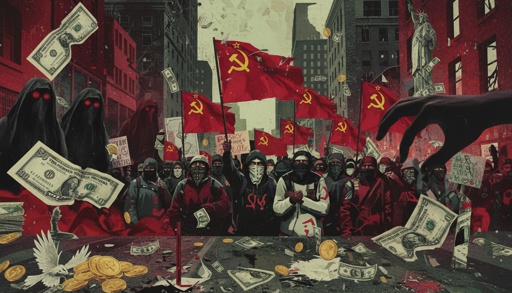
May Day 2026 is being framed as a “labor uprising,” but critics say the organizing infrastructure now runs through a strange new pipeline: Democratic-aligned groups sharing the street with openly communist networks.
What the May Day coalition says it is—and what critics say it has become
Organizers tied to communist and socialist movements promoted May 1 actions as protests and work stoppages, including “No School, No Work, No Shopping” messaging reported in coverage of the events. CPUSA messaging describes the day in explicitly anti-MAGA terms, urging workers to mobilize against Trump-era policies. Critics highlighted by conservative reporting argue that this goes beyond traditional labor advocacy and turns May Day into a broader ideological confrontation aimed at delegitimizing the current administration.
Fox News reporting described a far-reaching organizing web involving hundreds of groups and large combined revenue, portraying it as a coordinated effort rather than spontaneous local demonstrations. The same reporting characterized the coalition as blending traditional progressive infrastructure with far-left organizations that advocate systemic change. The key factual limitation is transparency: outside the reporting itself and public calls from groups like CPUSA, comprehensive documentation of every participating organization and its role is not fully available in the provided research.
The alleged “red-blue alliance” hinges on affiliates, not a national party endorsement
Breitbart and Fox News both emphasize alleged links between the protest network and Democratic-aligned entities, including state or local party chapters and major progressive activist brands. The reporting points to participation or coordination by organizations that commonly operate in Democratic politics, such as Indivisible and MoveOn, as well as labor allies. However, the research provided also flags a crucial gap: no direct confirmation is cited showing a national Democratic Party directive endorsing communist organizers or officially co-planning the events.
This distinction matters for voters trying to separate three different realities: what the most radical factions are openly advocating, what mainstream progressive groups are practically cooperating with on the ground, and what the Democratic Party institutionally approves. In a polarized climate, local coalitions can form around shared opposition to Trump without proving that every participant shares the same end goal. Still, coalitions come with reputational costs—especially when partners publicly call for dismantling capitalism and treat American institutions as the enemy.
Why May Day’s history makes the messaging fight inevitable
May Day has dual roots that collide in American politics: it traces back to U.S. labor activism, including the Haymarket-era push for an eight-hour day, but it also became an international socialist and communist holiday through later political movements abroad. That legacy creates an opening for competing narratives. Many Americans hear “workers’ rights,” while others hear “imported revolutionary politics.” The 2026 protests intensify that tension by mixing labor themes with explicitly anti-MAGA mobilization rhetoric.
That historical ambiguity is also why conservatives see a cultural and civic risk in “movement” coalitions that downplay ideology for turnout. When political organizing adopts a holiday strongly associated with socialist movements, it invites questions about whether the goal is policy reform or system replacement. The research here supports at least one narrow conclusion: communist organizations are not hiding the ball about their worldview, and they are positioning May Day as a vehicle for that worldview.
What this means for governance, trust, and the “failing government” mood
The immediate impact of large coordinated demonstrations is disruption risk—especially when organizers promote broad work stoppages or consumer boycotts. The longer-term impact is political: these events can deepen the sense that the country is splitting into rival activist ecosystems that treat elections as temporary obstacles rather than legitimate outcomes. For conservatives already frustrated with inflation, border chaos, and cultural radicalism, reported partnerships with socialist groups confirm fears that “progress” politics increasingly has no limiting principle.
Report: Democratic Party Planning May Day Events with Communist Groups https://t.co/zczsuR6pCX via @BreitbartNews how many and how much are they paid. I told you once the masks started , communism would follow
— Dan Daly (@drdaly66) May 1, 2026
For older liberals who distrust corporate power and feel squeezed by costs, the appeal is simpler: protest becomes the only visible lever when government feels unresponsive. That overlap—shared anger at institutions—helps explain why strange-bedfellow coalitions can form. The question for Democrats, if the reporting is even partly accurate, is whether short-term anti-Trump unity is worth normalizing groups that openly reject core American constitutional traditions and market economics.
Sources:
600 groups with $2B in revenue back May Day protests, critics say
Workers rise against MAGA on May Day
Report: Democratic Party Planning May Day Events with Communist Groups
May Day: A Century of Worker Resistance
![🇺🇸|🇱🇧 President Donald Trump Meets President of Lebanon Joseph Aoun at The White House [LIVE]](https://capitaltimes.org/wp-content/uploads/sites/3/2026/07/maxresdefault-11-218x150.jpg "High-Stakes Oval Deal Teases Breakthrough")