
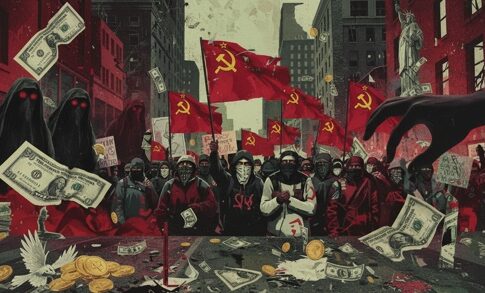
The most politically consequential protests aren’t the loudest ones in city centers—they’re the ones that convince suburban neighbors to stop whispering and start showing up.
When the Cul-de-Sac Joins the March, National Politics Changes
March 28, 2026, sits on the calendar like a stress test: organizers call it “No Kings 3,” the third wave of demonstrations against Donald Trump’s second administration. The hook isn’t only the size—over 3,000 protests have been planned—it’s the evolving crowd. Reports describe suburban residents, often allergic to megaphones and street politics, deciding the fight has reached their zip code. That shift is the headline.
Suburban protest participation carries a specific kind of cultural authority. A downtown march can be dismissed as “what activists do.” A march that pulls in parents from soccer sidelines, retirees from HOA meetings, and professionals who normally avoid yard signs is harder to caricature. It reframes dissent as mainstream behavior, not fringe identity. That’s why the phrase “This is our fight” lands: it signals ownership, not spectatorship.
The No Kings Timeline: From 2025 Rallies to 2026 Strikes and War Opposition
The movement’s arc matters because it explains why new demographics feel compelled to join. The first No Kings protests began in June 2025, followed by a second major rally and march on October 18, 2025. By early 2026, the activism broadened beyond weekend demonstrations into labor-style disruption, including a January 23 general strike in Minnesota tied to “Operation Metro Surge,” and a January 30 nationwide strike.
March 2026 adds another accelerant: the protests now explicitly include opposition to the 2026 Iran War alongside immigration enforcement controversies. Rising gas prices, missile-exchange headlines, and tougher airport security create a daily-life backdrop that makes geopolitics feel personal. The result is a movement that doesn’t argue only about abstract constitutional norms. It argues about household budgets, community safety, and whether Washington is spiraling toward rule by force.
What’s Driving the Anger: ICE Incidents, Executive Power, and a Wider Crisis Mood
Organizers and sympathetic coverage point to specific flashpoints, including allegations of violence connected to immigration enforcement and deaths cited as catalysts: Renée Good, Keith Porter, and Alex Pretti. They also point to mass deportation efforts and expanded enforcement operations as proof of an administration comfortable with coercion. Those claims deserve careful scrutiny case by case, but the political effect is clear: perceived overreach can unify people who disagree on almost everything else.
War broadens that coalition further because it tests a very American kind of common sense: risk should match necessity. Many voters who lean conservative tolerate strong borders and decisive executive action, but they recoil at disorder, endless conflict, and policies that feel improvised or punitive for show. That tension helps explain why protests can gain traction outside big-city progressive circles, even among people who dislike street politics and dislike chaos more.
The Movement’s Strategic Pivot: Win the Middle, Avoid the Match
No Kings organizers emphasize nonviolence, and they have reason to. Public tolerance for political violence reportedly swung upward earlier in 2025 and then dropped later in the year. If a movement wants suburban buy-in, it can’t look like a street brawl waiting to happen. The suburban “join rate” rises when marches look like civic participation—permits, signs, families, clear rules—and falls when they look like an invitation to confrontation.
That discipline also doubles as political persuasion. Peaceful mass turnout forces institutions—media, local leaders, employers—to acknowledge a grievance as legitimate even when they oppose the message. It also denies opponents an easy talking point. From a conservative-values lens, the strongest form of protest is the kind that respects law enforcement’s role, protects bystanders, and keeps the focus on policy outcomes rather than adrenaline.
What a Giant Day of Protests Can—and Cannot—Accomplish
Even if March 28 becomes historic in turnout, protest size doesn’t automatically translate into policy change. Demonstrations pressure officials when they create sustained consequences: shifts in polling, donor behavior, volunteer networks, primary challenges, or legislative discomfort back home. The January strikes show one pathway—economic disruption gets attention fast—but it also risks backlash if ordinary people feel held hostage by organizers’ tactics.
The likelier long game is normalization: repeated, orderly protests that make dissent a regular civic habit in places that typically outsource politics to election day. That’s where suburbs matter most. They are often the hinge between ideological camps, and they punish perceived extremism quickly. If No Kings stays nonviolent and broad, it can keep that hinge in motion. If it narrows into ideological theater, the moment fades.
Suburbanites embrace anti-Trump resistance before No Kings protests, saying, 'This is our fight' https://t.co/rEfc1HZO8H
— Courthouse News (@CourthouseNews) March 26, 2026
March 28, 2026, therefore isn’t just another date for signs and slogans. It’s a referendum on whether a protest brand can mature into a durable civic coalition—one that attracts the cautious neighbor, not just the committed activist. Suburbanites joining doesn’t prove every claim made by organizers, and it doesn’t settle any policy debate. It proves something else: when ordinary comfort no longer feels safe, ordinary people become political.
Sources:
https://time.com/article/2026/03/24/no-kings-protests-march-28-biggest-anti-trump-crowds-ever/
https://en.wikipedia.org/wiki/March_2026_No_Kings_protests
https://www.commondreams.org/news/no-kings-2026
https://www.aaup.org/event/nationwide-no-kings-protest